
Wildlife Control & Removal in North College Hill, Ohio
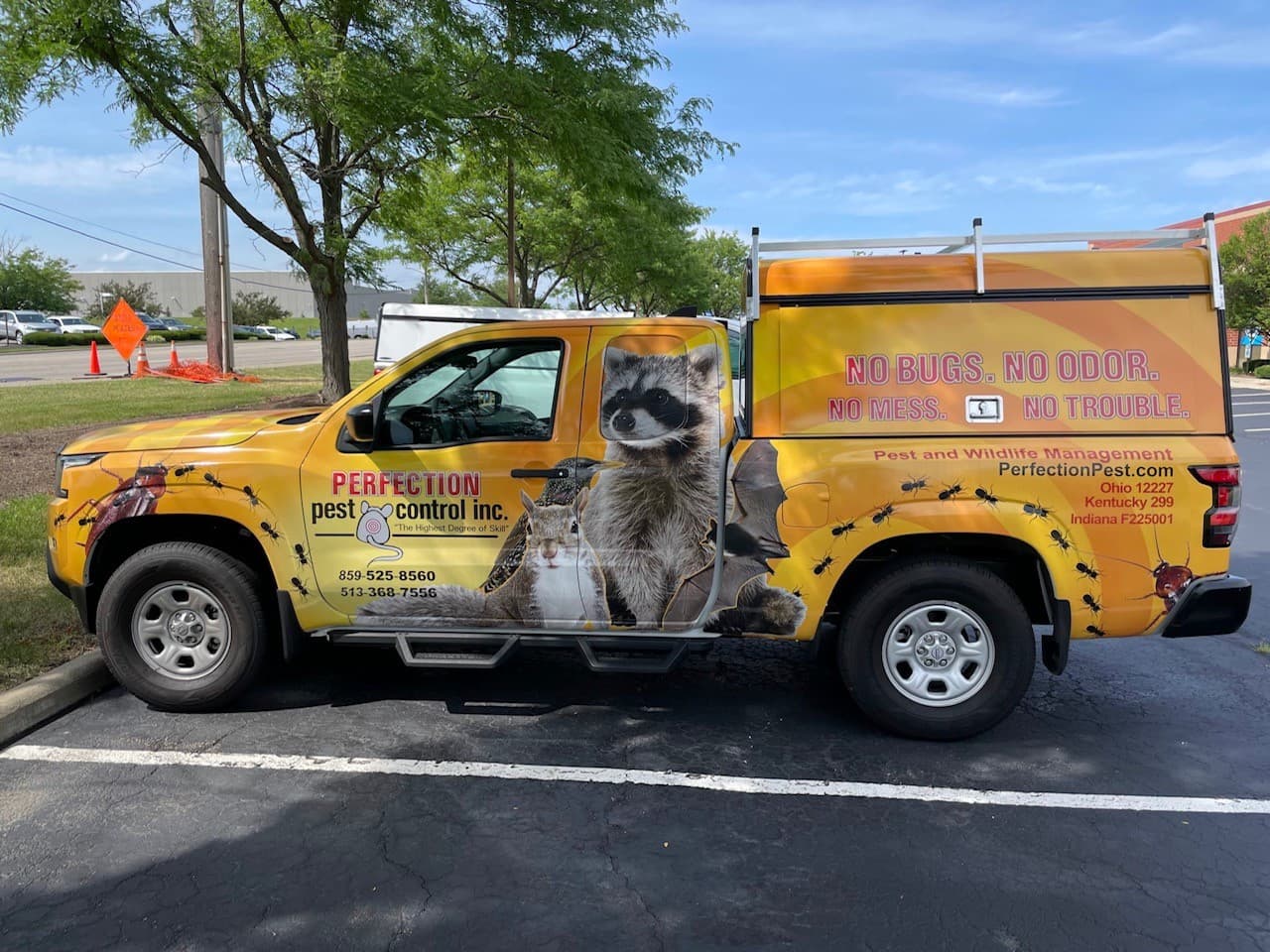
When a raccoon sets up camp in your attic or a squirrel chews through your soffit, you need more than a trap. You need a plan. Perfection Pest Control handles wildlife removal, entry point sealing, damage repair, and contamination cleanup for homes throughout North College Hill and Hamilton County. We've been doing this since 1998, and we know every trick these animals use to get inside.
Call for Inspection (Fee May Apply)Wildlife We Handle in Hamilton County
The greater North College Hill area is home to plenty of wildlife that's happy to share your home if given the chance. Here are the animals we deal with most:
- Raccoons are the biggest problem. They're strong enough to rip open soffits, tear off vent covers, and peel back roofing. A single raccoon in your attic can cause thousands of dollars in damage to insulation, ductwork, and wiring. They also carry rabies and raccoon roundworm. - Squirrels are persistent. They gnaw through wood, aluminum, and even lead flashing to get inside. Once they're in your attic, they'll chew on electrical wiring, which is a genuine fire hazard. - Opossums tend to den under porches, decks, and sheds. They're less destructive than raccoons but can carry fleas, ticks, and other parasites into your yard. - Groundhogs dig extensive burrow systems under foundations, patios, and outbuildings. Their tunnels undermine structural support and create tripping hazards. - Bats and birds require specialized handling (we have separate pages for those). Both involve legal considerations and specific exclusion techniques.
Every situation is different. The animal, the entry point, the time of year, and whether there are juveniles involved all change how we approach the job.
Our Wildlife Removal Process
We don't just set a trap and hope for the best. Our process is designed to solve the problem completely so you're not calling us back in three months.
Step 1: Full Property Inspection A technician inspects your home's exterior from ground level to roofline, looking for active entry points, potential entry points, and damage. Inside, we check the attic, crawl space, and any areas where you've heard noise or seen signs of activity. We identify the species, estimate how long they've been there, and assess the damage.
Step 2: Humane Removal We use live traps sized and baited for the target species. Trap placement matters. We position traps along travel paths, near entry points, and in areas where the animal is active. Traps are checked daily. Captured animals are handled according to State Fish and Wildlife regulations.
For some situations, one-way exclusion doors are more effective than trapping. These devices let the animal leave on its own but prevent re-entry. We use these when trapping isn't practical or when we're dealing with a nursing mother who needs to reach her young.
Step 3: Exclusion (Sealing Entry Points) This is the most important step. Removing the animal means nothing if the entry point stays open. We seal every gap, hole, and vulnerability using heavy-gauge hardware cloth, galvanized steel, expanding foam, and flashing. We don't use materials the animal can chew through.
Step 4: Damage Repair & Cleanup Wildlife leaves more than just holes. Insulation gets flattened, soaked with urine, and contaminated with feces. Ductwork gets torn apart. Wiring gets chewed. We handle insulation replacement, duct repair, sanitization, and deodorization. If the job requires structural repair beyond our scope, we'll recommend a contractor we trust.
Common Entry Points We Find
After 25+ years of wildlife work in this region, we've seen animals get creative. But most of the time, they're exploiting the same weak points:
- Soffit intersections where the roof meets the wall. Construction gaps here are the #1 entry point for squirrels and raccoons. - Ridge vents and roof vents that lose their screens or have plastic louvers that animals can push through. - Gable vents with deteriorated screening. Bats love these. - Chimney flues without caps. Raccoons climb in. Birds nest on ledges. - Plumbing and HVAC penetrations through the roof or exterior walls that were never properly sealed. - Foundation vents in crawl spaces. Opossums, skunks, and groundhogs use these. - Rotted fascia board that raccoons and squirrels can pull apart with their hands. - Dryer vents and exhaust vent covers that have fallen off or broken.
During every inspection, we check all of these. Even if only one is currently active, we flag every vulnerability so you can address them before the next animal finds its way in.
Health Risks from Wildlife in Your Home
This isn't about being squeamish. Wildlife in your home creates real health hazards that affect your family.
Raccoon feces can contain raccoon roundworm (Baylisascaris) eggs, which are dangerous to humans and particularly to children. The eggs become airborne when dried feces are disturbed. Proper cleanup requires protective equipment and specific sanitization procedures.
Bat guano accumulations can harbor Histoplasma capsulatum, a fungus that causes histoplasmosis when spores are inhaled. This is a genuine respiratory health concern, especially in enclosed attic spaces.
Squirrel and raccoon urine saturates insulation, creating persistent odors and potential mold growth. The moisture damage can affect ceiling drywall and structural wood.
All wildlife can carry ectoparasites (fleas, ticks, mites) that remain in the nesting area after the animal is removed. If you evict a raccoon but don't treat the area, you may end up with a flea infestation inside your home.
This is why we include cleanup and sanitization as part of our complete wildlife removal service. Trapping alone doesn't address the contamination left behind.
Why DIY Wildlife Removal Is a Bad Idea
We get it. You see a raccoon in your attic and your first thought is to grab a trap from the hardware store. Here's why that usually makes things worse:
- You might trap a nursing mother. If juveniles are left behind in the attic, they'll die and create a much bigger problem. We check for young before removing any adult animal. - Legal issues. Ohio has specific regulations about trapping, relocating, and handling wildlife. Some species are protected. Violating wildlife regulations carries fines. - Bite and scratch risk. A cornered raccoon is dangerous. A cornered raccoon protecting her young is extremely dangerous. Rabies post-exposure treatment costs over $10,000. - Incomplete exclusion. Setting a trap without sealing the entry means the next animal (or the same one) will be back within weeks. - Contamination exposure. Disturbing a raccoon latrine or bat guano without proper respiratory protection puts your health at risk.
Our technicians are trained and equipped for this work. We carry the proper state licenses, liability insurance, and protective equipment. And honestly, we're faster at it than you'd be. Most jobs are resolved within 1-2 weeks from first call to final seal.
Frequently Asked Questions
Wildlife removal pricing depends on the species, number of animals, accessibility of the entry points, and whether damage repair is needed. Basic trapping and exclusion for a single entry point starts around $300-$500. Full attic restoration with insulation replacement can run $2,000-$5,000+. We provide a detailed estimate after inspection. Right now we're offering $50 off wildlife control services.
Most trapping situations are resolved within 5-10 days. One-way exclusion doors may take a few days to a week for the animal to leave on its own. We check traps daily and keep you updated. Exclusion and repair work is typically completed within 1-2 days after the animal is confirmed out.
No. We use humane live traps. All captured animals are handled according to State Fish and Wildlife regulations. In some cases, euthanasia may be required by law (for example, if an animal tests positive for rabies), but our standard practice is humane live capture.
Nighttime scratching or thumping usually points to raccoons or mice. Raccoons are heavier and louder. Mice sound lighter, like quick scratching or scurrying. If you hear activity at dawn and dusk, it's more likely squirrels. We'll identify the animal during inspection based on the sounds you describe, the droppings we find, and the type of damage at entry points.
It depends on your policy. Some homeowners insurance covers sudden damage from wildlife (like a raccoon tearing through your roof) but excludes gradual damage or pest infestations. The removal itself usually isn't covered. Check with your agent. We can provide documentation of the damage for your claim if needed.
Spring and fall. In spring (March-May), animals seek sheltered spaces to have young. You'll see a spike in raccoon, squirrel, and bird intrusions. In fall (September-November), animals look for warm spots to ride out winter. Raccoons, opossums, and squirrels all become more aggressive about getting inside as temperatures drop.
Wildlife in Your North College Hill Home? We'll Handle It.
From the first scratching sound to the final sealed entry point, we manage the entire process. Humane removal, professional exclusion, and thorough cleanup. Over 10,000 homes protected since 1998. Note: Wildlife inspections require a $75 inspection fee.