
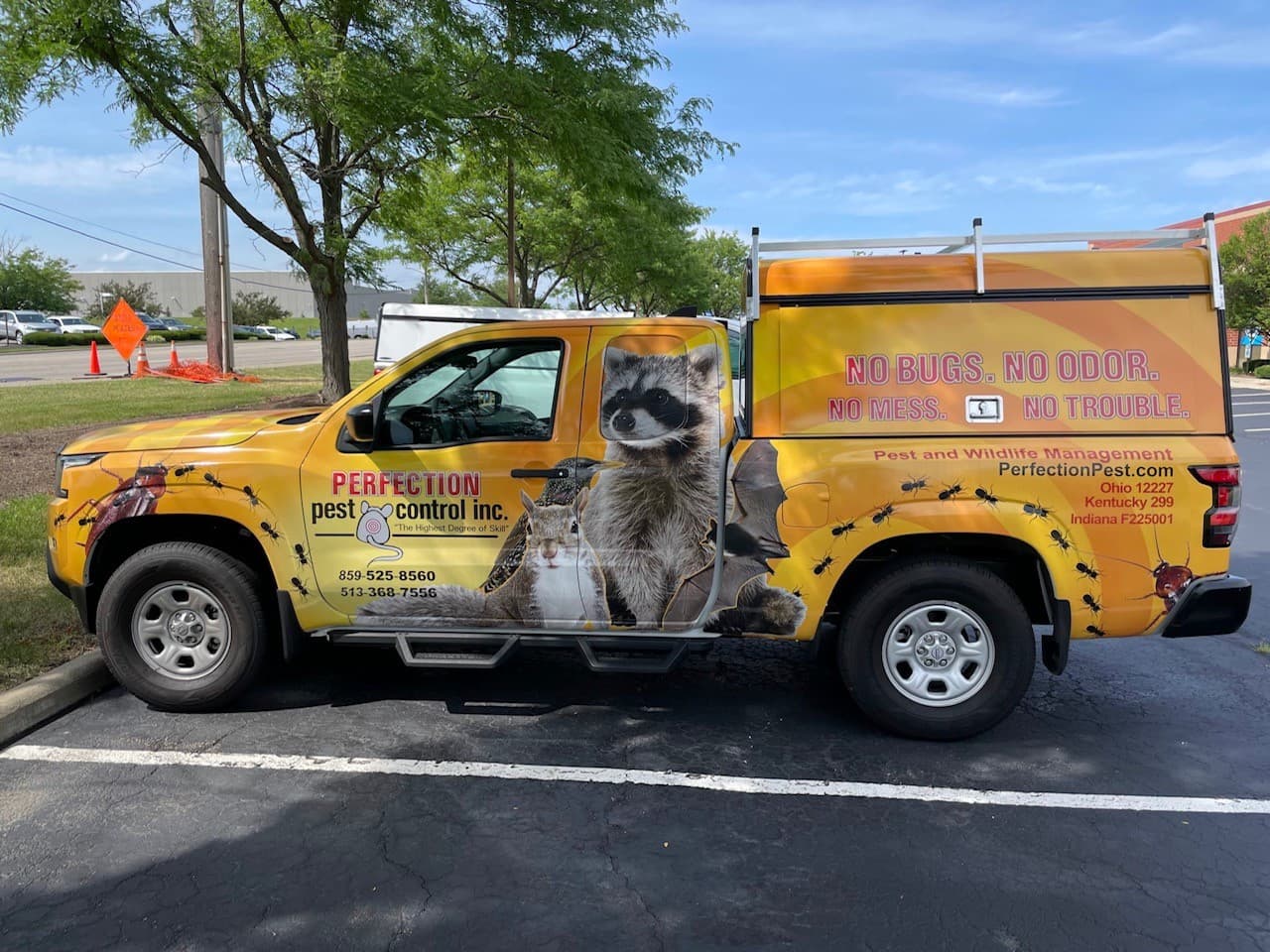
Raccoon & Squirrel Trapping in Villa Hills, Kentucky
Raccoons and squirrels are the two most common wildlife invaders in Villa Hills homes, and they're also the most destructive. A raccoon can tear a hole in your roof in a single night. A squirrel can chew through a live electrical wire and start a fire. If you're hearing thumping, scratching, or scurrying in your attic or walls, you're probably dealing with one of these two. Perfection Pest Control provides professional trapping, removal, and permanent exclusion for raccoons and squirrels throughout Kenton County.
Call for Inspection (Fee May Apply)Raccoons in Your Attic: What You're Dealing With
Raccoons are strong, smart, and determined. An adult raccoon weighs 15-40 pounds and has hands dexterous enough to turn doorknobs. When they decide your attic is a good den site, they'll rip through soffits, pry off vent covers, and tear out screening to get inside.
Once in your attic, the damage escalates fast:
- Insulation destruction. Raccoons flatten, shred, and saturate insulation with urine and feces. A single raccoon can ruin hundreds of square feet of insulation within weeks. Your heating and cooling bills spike, and the contamination creates health risks. - Ductwork damage. Raccoons tear apart flexible ductwork to use as nesting material or simply because it's in their way. - Wiring. While raccoons don't chew wires as aggressively as squirrels, they'll pull wires loose, step on junction boxes, and damage connections by sheer force and weight. - Structural wood. Raccoons mark their territory. Repeated urine soaking causes wood rot in rafters, joists, and decking. - Entry point expansion. Raccoons widen the original entry point over time, creating a gap large enough to let in rain, other animals, and insects.
The health risks are serious. Raccoon feces can contain Baylisascaris (raccoon roundworm) eggs that become airborne when dried droppings are disturbed. Raccoons are also the primary rabies vector in Kentucky. Never attempt to handle or corner a raccoon yourself.
Squirrels in Your Home: Smaller But Relentless
Gray squirrels and fox squirrels are both common in Villa Hills. They're smaller than raccoons, but they make up for it with persistence and their constant need to gnaw.
Squirrel damage looks different from raccoon damage:
- Electrical wiring. This is the big one. Squirrels gnaw on everything to keep their ever-growing teeth worn down. Electrical wiring is a favorite target. Exposed or damaged wiring in an attic full of insulation is a fire waiting to happen. The Insurance Information Institute estimates that rodent-chewed wiring causes thousands of house fires annually. - Entry point gnawing. A squirrel only needs a 1.5-inch opening to get inside. They'll find a small gap and chew it wider. Even aluminum and thin steel can't stop them. - Stored items. Squirrels will shred boxes, clothing, and anything else in your attic for nesting material. - Noise. Squirrels are active during the day, especially early morning and late afternoon. You'll hear rapid scurrying across the ceiling, scratching in the walls, and the distinctive sound of gnawing.
Squirrels are creatures of habit. They'll use the same entry point, the same travel path, and the same nesting area every day. That predictability actually helps us trap them efficiently.
Juvenile Animal Season: Why Timing Matters
Both raccoons and squirrels have predictable breeding seasons in Kenton County, and this directly affects how we handle removal.
Raccoons give birth in late March through early May. A typical litter is 3-5 kits. The juveniles can't leave the den for 8-10 weeks. If we trap and remove a mother raccoon during this period without finding her young, the kits die in your attic. That's both inhumane and creates a much worse problem for you.
Squirrels have two breeding seasons: late winter (January-February, with young in March-April) and midsummer (June-July, with young in August-September). Juvenile squirrels stay in the nest for about 10 weeks.
During juvenile season, we always check for young before trapping or installing exclusion devices. If juveniles are present, we have a few options:
1. Wait for them to mature and become mobile (usually a few weeks), then exclude the entire family. 2. Carefully move the juveniles to a reunion box near the entry point so the mother can retrieve them and move them to an alternate den. 3. Use one-way exclusion doors that allow the mother to leave and return to feed her young, then seal once the entire family is out.
The right approach depends on the species, the age of the young, and the specifics of your home. We'll explain the options and let you decide.
How We Trap Raccoons and Squirrels
Our trapping methods are humane, species-appropriate, and proven effective over thousands of jobs.
Raccoon Trapping We use large cage-style live traps baited with species-appropriate attractants. Trap placement is critical. Raccoons follow specific paths between their den and food sources, and they're suspicious of unfamiliar objects. We position traps along these travel routes, often on rooftops, near downspouts, or at the base of trees adjacent to the entry point. Traps are checked every 24 hours per Kentucky law. Captured raccoons are handled according to State Fish and Wildlife regulations.
Squirrel Trapping For squirrels, we use smaller repeating traps or single-catch traps placed at or near the entry point. Squirrels are less cautious than raccoons and are typically caught within 1-3 days. In some cases, a one-way exclusion door mounted over the entry point is more efficient than trapping. The squirrel leaves to forage and can't get back in.
What doesn't work: Mothballs, ammonia, ultrasonic devices, strobe lights, predator urine, and loud music. You'll find all of these recommended online. None of them produce reliable results. An animal that's established a den in your attic has too much invested to leave because of a bad smell or annoying noise. Save your money.
Re-Entry Prevention: The Step Most Companies Skip
Trapping removes the animal. Exclusion prevents the next one. Without both, you're just cycling through the same problem.
After removal, we seal every entry point and potential entry point on your home:
- Active entry points are sealed with heavy-gauge galvanized hardware cloth, steel flashing, or solid wood depending on the location. We use fasteners and materials that raccoons can't pull apart and squirrels can't gnaw through. - Potential entry points are reinforced proactively. If a soffit intersection is showing wear, we reinforce it before a squirrel finds it. If a gable vent screen is deteriorating, we replace it. - Roof returns, construction gaps, and plumbing penetrations are sealed. These are the spots most general contractors leave open and most homeowners never check.
We back our exclusion work with a warranty. If the same species gets back in through an entry point we sealed, we come back at no charge.
Attic Restoration Once the animals are out and the entries are sealed, we address the damage they left behind:
- Remove contaminated insulation - Sanitize and deodorize the space with commercial-grade enzyme treatments - Inspect wiring for chew damage (we'll recommend an electrician if we find exposed conductors) - Replace insulation to restore your home's energy efficiency - Repair damaged ductwork
The full restoration returns your attic to pre-infestation condition and eliminates the scent markers that attract future animals to the same spot.
Other Pests We Treat
Frequently Asked Questions
Trapping and basic exclusion for a single raccoon or squirrel entry point typically runs $350-$600. If multiple entry points need sealing, the cost increases accordingly. Full attic restoration (insulation removal, sanitization, re-insulation) is a separate scope that can range from $1,500-$5,000 depending on the extent of contamination. We're currently offering $50 off wildlife control services. We provide a complete estimate after inspection so there are no surprises.
Most raccoon jobs are resolved within 5-7 days. We set traps on day one, check them daily, and begin exclusion once we've confirmed the attic is empty. Squirrels are typically faster, often caught within 1-3 days. Juvenile season can extend the timeline if we need to wait for young animals to become mobile.
Time of day is the best clue. Raccoons are nocturnal. Heavy thumping, walking sounds, and vocal chattering at night point to raccoons. Squirrels are diurnal (active during daylight), with peak activity in early morning and late afternoon. Light, fast scurrying during the day is typically squirrels. If you hear noises at night that sound light and fast, mice or rats are more likely than either raccoon or squirrel.
Raccoons have strong homing instincts. All captured animals are handled according to State Fish and Wildlife regulations. More importantly, we seal every entry point so that even if a raccoon returns to the area, it can't get back inside your home. The exclusion work is the real solution.
Squirrels can gnaw through thin aluminum, soft metals, and even lead flashing. They can't chew through heavy-gauge galvanized hardware cloth (16-gauge or heavier) or steel flashing. That's why material selection matters in exclusion work. We don't use expanding foam, caulk, or lightweight screening as primary barriers against squirrels. Those materials buy you days, not months.
Licensed pest control operators can trap raccoons year-round in Kentucky. All captured animals are handled according to State Fish and Wildlife regulations. Homeowners face more restrictions. Trapping regulations vary by county and season. Using the wrong trap type or failing to check traps within the required timeframe can result in fines. We handle all trapping in full compliance with Kentucky wildlife regulations, and our technicians hold the required state licenses.
Raccoons or Squirrels in Your Villa Hills Home?
We trap them, seal your home, and clean up the mess. Every job includes entry point exclusion so the problem doesn't come back. Over 25 years of wildlife experience in Kenton County. $50 off wildlife control right now.